Automatic Class Check In

Club Automation
Club Automation serves as a comprehensive platform for club management, addressing various operational needs efficiently. Crafted by club owners, it understands the specific requirements of clubs. It aids in engaging prospects, converting leads, and facilitating member activation seamlessly. From overseeing administrative tasks to managing memberships and scheduling, Club Automation simplifies operations. It offers automated communication features and digital marketing tools to enhance member experience. Additionally, it provides reporting and analytics functionalities for performance tracking. With Club Automation, clubs can effectively streamline their processes and achieve their business goals.
Understanding the problem
The Problem
Following the COVID shutdowns, gyms utilizing the Club Automation system encountered difficulties in efficiently managing class check-ins as members returned. Front desk staff frequently missed checking in attendees to their classes amidst the overwhelming influx with less employees. This resulted in instructors being tasked with manually marking attendance before or after classes, often resorting to paper-based methods. Moreover, instructors had to verify class rosters post-class to ensure accuracy for payroll purposes. This manual process led to frustrations and payroll discrepancies among administrators and instructors due to the added workload and inefficient procedures.
Research
01
Customer complaints review
In customer discussions, a prevalent concern emerged regarding a shortage of staff, exacerbated by gyms' efforts to maximize class offerings. This drive stemmed from the revenue loss experienced during the COVID-19 pandemic. Consequently, many teaching staff found themselves conducting back-to-back classes for several hours. Gym controllers expressed frustration over roster errors caused by delays in information input by teaching staff.
02
Interviews
Out of the 18 customers we contacted, we conducted interviews with 10. Our objective was to grasp the extent of the issue and its consequences. These interviews were aimed at pinpointing the main concerns and the parties impacted. Each call was scheduled over Zoom for 30 minutes with a set of questions to address our goal. After concluding the calls, it became apparent that the problem significantly impacted staff payroll, especially those reliant on class attendance for compensation. Nevertheless, it also represented an additional workload for other gym customers.
Understanding the user
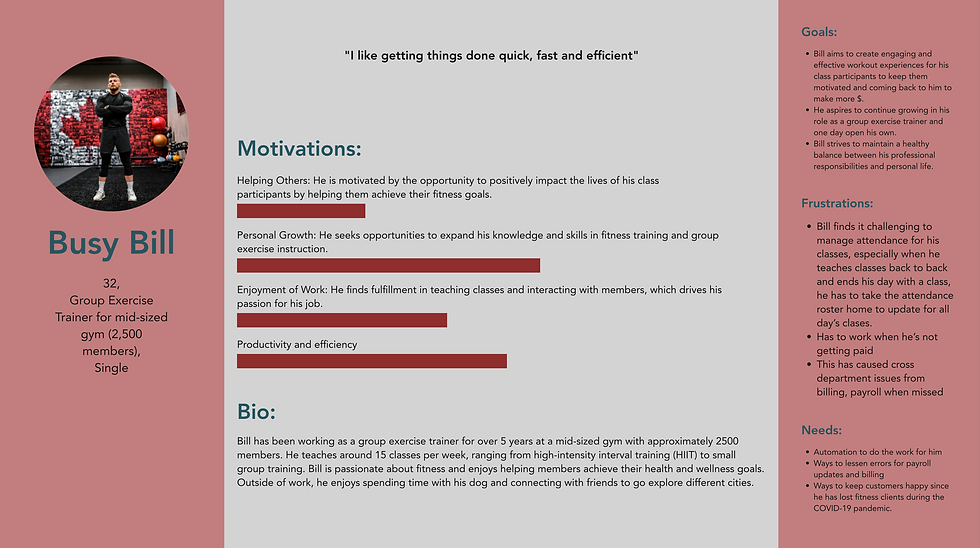
Personas
During our in-depth interviews with 10 customers we had enough data to help us gaine a comprehensive understanding of our target user, Bill.
Bill emerged as a pivotal persona, representing a dedicated group exercise trainer with a drive to grow his clients and his professional achievements. Through our interviews, we delved into Bill's motivations, frustrations, and aspirations, uncovering valuable insights that shaped our design decisions.
From Bill's desire for a simplified attendance tracking system to his commitment to maintaining a healthy work-life balance, we gleaned essential details that guided the development of features tailored to meet his needs. Additionally, our discussions shed light on Bill's high priority of work life balance.
By immersing ourselves in Bill's world through the interview process, we were able to empathize with his unique challenges and aspirations, ultimately driving the creation of a fitness management solution that caters to his specific needs and enhances his overall experience as a group exercise trainer.
User Journey Mapping

Thankfully with the power of user journey maps, we were able to identify where the problem was stemming from. To uncover insights and identify pain points within a product or service. To gather insights, I facilitated a collaborative session with a group of 10 individuals representing customer service, implementation, product and sales. Together, we meticulously mapped out the flow of actions involved in the check-in process, from the moment a member arrives at the gym to the point at which their attendance is recorded on the roster.
Through this exercise, we were able to visualize the entire user journey and identify that there was something we could implement into the system that would help our staff members at the time of the registration from the member's mobile device.
By empathizing with the needs and frustrations of all stakeholders involved in the check-in process, I gained valuable insights that informed the design of solutions aimed at streamlining attendance management and improving the overall user experience for both gym staff and members.
This collaborative approach to user journey mapping proved invaluable in uncovering actionable insights and shaping the direction of the design solution, ultimately leading to a more efficient and user-friendly check-in experience within the fitness management application.
Ideation
Throughout the iterative design process of a fitness management application, I facilitated multiple ideation sessions with internal stakeholders to brainstorm innovative solutions to address the challenges identified through user research and journey mapping exercises. Thanks to these sessions not only was I able to understand the system logic much better, but it helped shed light on the different parts of the system that would also need to be updated in order for a proper solution to function.


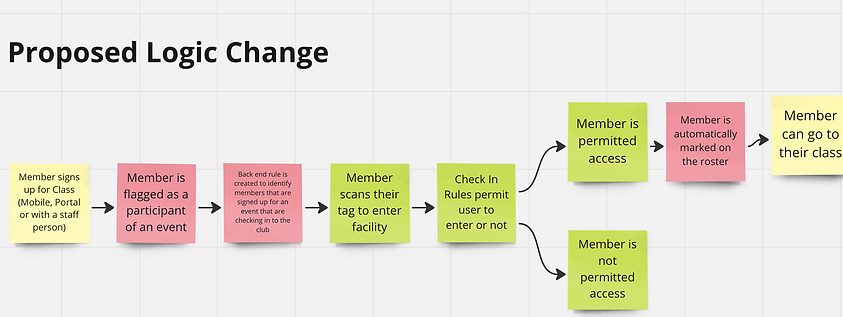
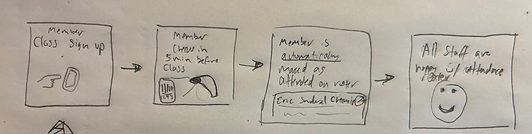
One pivotal idea that emerged from these ideation sessions was the concept of creating an automation to a check-in rule that would automatically update the member's status in the attendance roster. This solution aimed to eliminate the need for manual intervention by gym staff to record attendance after class hours, thus reducing the risk of errors and ensuring real-time accuracy of attendance data.
By leveraging the collective expertise and insights of the internal stakeholders, we were able to refine and iterate on this idea, ultimately shaping it into a practical and effective solution that addressed the pain points identified during user research.
Looking at the data
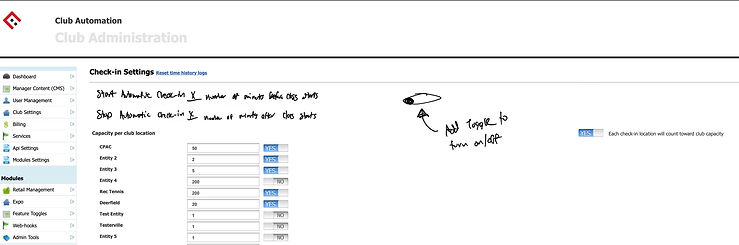
Collaborating closely with our data engineers, we gained valuable insights into user behavior. Our analysis revealed that an impressive 83% of our customer base consistently arrived for their classes a within 15 minutes before the scheduled start time. Notably, 10% of users demonstrated an even earlier arrival. Lastly, our observations also highlighted a 7% of users arriving after the class had commenced which meant we needed to include adjustable logic for different members at the gyms. This allowed for us to know we had to create configurable sections that allowed clubs to adjust.
An insightful discovery emerged from our data analysis: our customers rarely required individual location-specific settings or check-in rules. Instead, they sought a unified approach that applied globally to all their locations. Recognizing this pattern, we leveraged the data to implement a global rule system, streamlining the user experience by eliminating the need for location-specific configurations.
The full experience


Implementing this automation feature not only simplified the check-in process for gym staff but also enhanced the overall user experience for members by providing a seamless and efficient check-in experience all the while updating the reporting, payroll, attendance and financials without distributing any of the software operations.